

The path from concept to completion is not a one-size-fits-all journey. For decades, the traditional design-bid-build method has been the default route. But what if there was a more streamlined, collaborative, and cost-effective path? There is. It’s called the design-build delivery system—a methodology that reshapes projects by fundamentally rethinking the relationship between design and construction.
At first glance, the difference between traditional and design-build methods seems like a simple matter of sequence. But changing the order of steps, even slightly, has a profound impact on the efficiency, cost, and collaborative spirit of your next construction project.
The Traditional Route: A Linear Path with Pitfalls
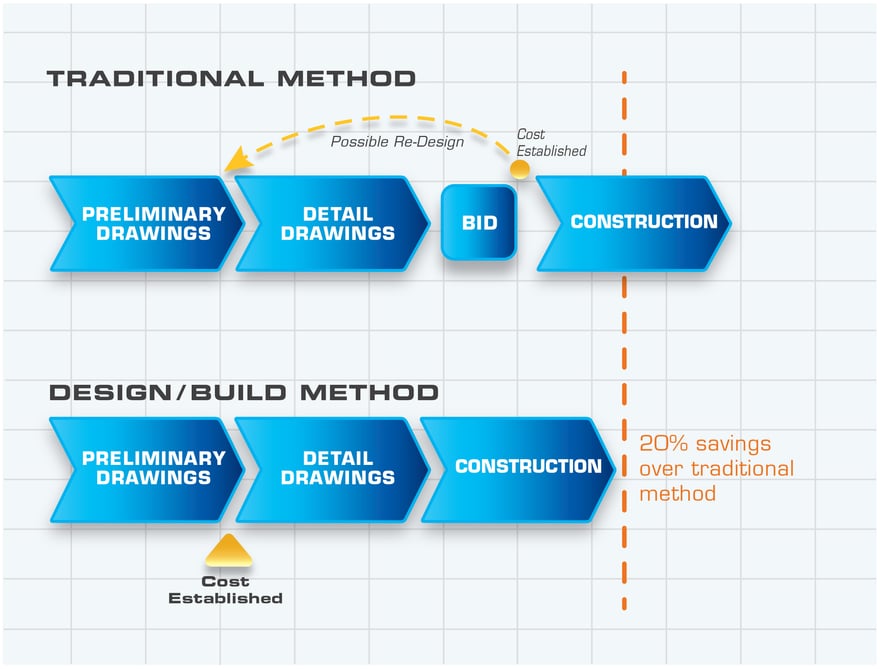
The conventional design-bid-build method is a linear, four-step process that looks like this: Preliminary Drawings > Detailed Drawings > Bid > Construction
While this method is familiar, its sequential nature creates a significant bottleneck: the project’s true cost isn’t established until the bid phase, which occurs after the design is fully complete. This often leads to a painful scenario where the owner receives bids that exceed the budget, forcing a partial or complete redesign. The result? Wasted time, squandered resources, and immense frustration before a single shovel even hits the dirt.
The Design-Build Advantage: A Unified Journey
The design-build method condenses this process into a more fluid, three-step system by eliminating the standalone bid phase. From the very beginning, the contractor is brought to the table alongside the owner and the designer. This single shift allows for total collaboration and for the cost to be established immediately after the preliminary drawings are prepared.
The financial benefit of this early collaboration is staggering. Studies and project data consistently show that the design-build method yields significant cost savings compared to the traditional approach.
Research from the Design-Build Institute of America (DBIA) and Penn State University has demonstrated that design-build not only accelerates project delivery but also lowers overall costs by an average of 6.1%, with some projects achieving savings upwards of 12-20%. By having cost expertise inform the design early on, the project avoids costly redesigns and value-engineering exercises late in the game.
One Team, One Contract, One Goal
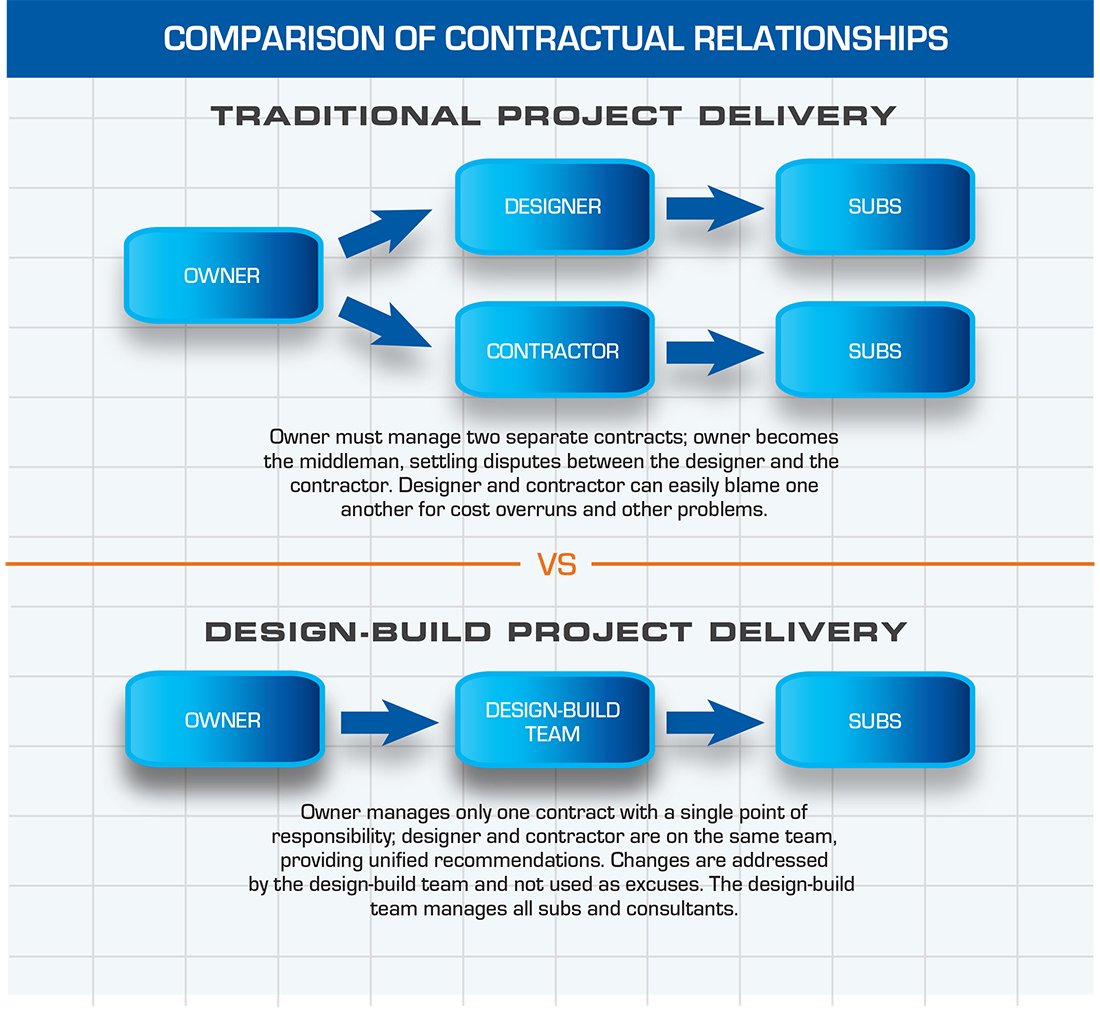
Beyond cost and time savings, the most transformative aspect of design-build lies in its contractual relationships. In a traditional project, the owner acts as the middleman, managing separate contracts with the designer and the contractor. When issues arise—as they inevitably do on a complex project—the designer and contractor can be inclined to point fingers, leaving the owner to mediate disputes and absorb the resulting delays and costs.
Design-build flips this dynamic on its head. The owner has a single contract with one entity: the design-build team. This unified team, comprising the designer, contractor, and their consultants, shares responsibility. Instead of blaming one another, they are incentivized to work together constructively to overcome obstacles. This transforms the project dynamic from adversarial to collaborative.
The Ripple Effects of Collaboration
This collaborative foundation creates powerful ripple effects. Communication is significantly improved because the entire team is working from the same playbook, towards the same goal. With more minds working in concert, innovation flourishes, and potential problems are identified and solved proactively rather than reactively.
Furthermore, keeping costs down and the project on schedule is in everyone’s best interest. The sooner the project is completed, the sooner the owner can occupy the site and begin using it productively. This alignment of goals results in a happier client and a more successful project for all involved.
F&W’s Design-Build Experience: Building the Future for LaBamba Tortilleria
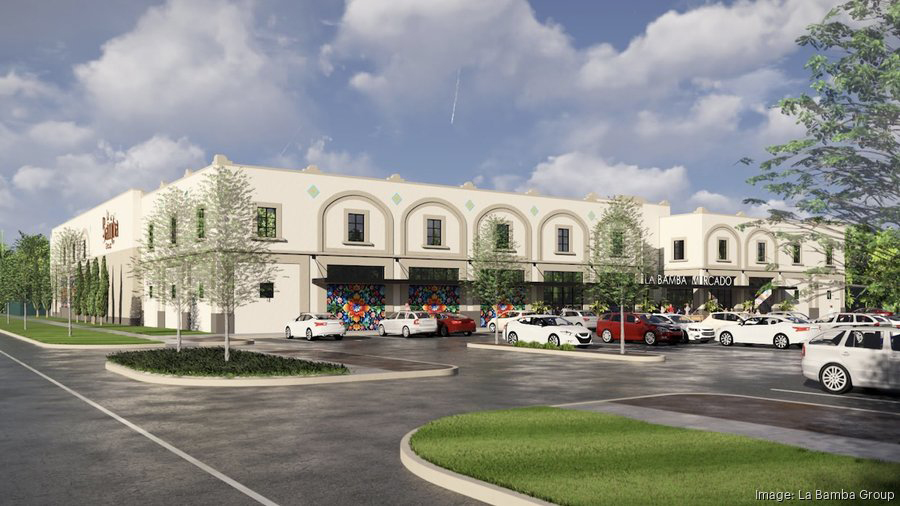
The power of the design-build model comes to life in our current partnership with the LaBamba Group. Since opening shop in Ohio City five years ago, this minority-owned business has experienced nothing but growth, creating fresh corn tortillas for Cleveland’s culinary scene. With demand outpacing their original space, owner Leticia Ortiz is embarking on an exciting expansion.
Fortney & Weygandt is proud to be delivering LaBamba’s new 35,184-square-foot production facility on W. 130th Street through a $7.2 million design-build contract. Partnering with Onyx Creative, our unified team is managing a scope that includes precast concrete and structural steel to create a state-of-the-art factory. This new space will empower LaBamba to not only increase production of their beloved corn tortillas but also to add a full line of flour tortillas and, for the first time, launch a major retail component, getting their products into the hands of consumers at their facility and in local supermarkets.
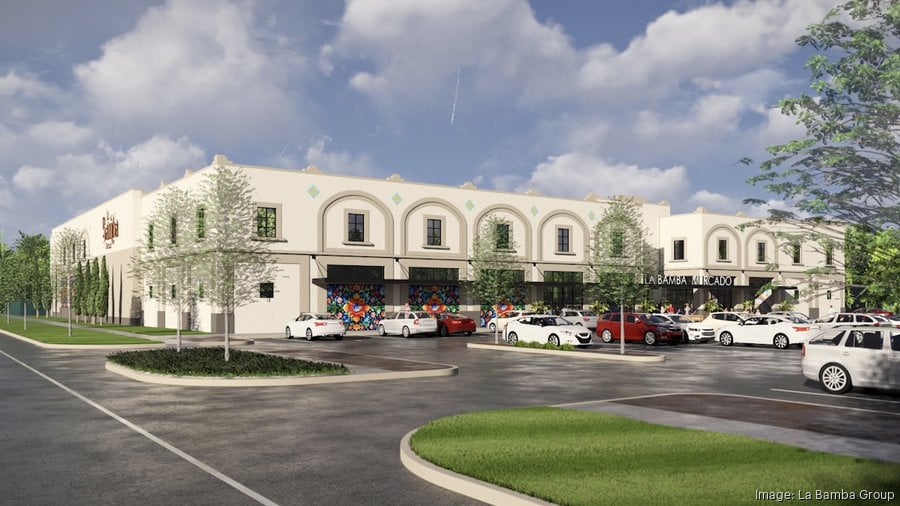
The project has not come without problems—we were quickly faced with significant geotechnical and soil challenges. Because our team was unified from day one, we were able to proactively employ value engineering. Instead of proceeding with costly and time-consuming excavations and caissons, we collaboratively identified and implemented a rapid impact ground improvement solution, saving the client both time and money while effectively mitigating a major project risk.
By working as one team from the start, we are helping Leticia Ortiz turn her vision into reality—ensuring her move is not just a change of address, but a transformational leap for her business.
A Simpler, Smarter Way to Build
In short, the design-build method offers a simpler, more integrated process. It replaces the siloed, sequential steps of the past with a synchronized, team-oriented approach. The outcome is a project that is not only smoother and faster, but also more efficient and cost-controlled. For owners, designers, and contractors seeking a better way to build, the path forward is clear: build together, from the start.